











_11zon%20(1).jpg?width=302&height=124&name=linkedin-sales-solutions-vqWWOnA6--M-unsplash%20(2)_11zon%20(1).jpg)






It's not surprising that Statements of Work (SOWs) are attractive to corporate hiring managers. On the face of it, they are primarily used as a strategic tool to manage projects, control costs, and avoid internal workforce limits by shifting procurement from charges for labour hours to outcome-based costs. They offer an essential bypass for headcount freezes and instant access to specialised talent.
But this strategic convenience comes with a critical catch.
Hiring managers who use an SoW arrangement to ‘get around’ the internal hiring processes risk engaging professional workers that don’t satisfy the ‘whole of relationship’ test, and thereby risk hefty fines for engaging in ‘sham contracting’.
In the eyes of Australian regulators like the Fair Work Ombudsman (FWO) and the ATO, the label on the contract means nothing if the day-to-day reality of the arrangement looks like a permanent job. This exposes your enterprise to 'sham contracting', a legal risk that can result in massive financial penalties, retrospective payments for superannuation and entitlements, and devastating reputational damage.
This is the hidden cost of a fragmented workforce strategy.
So how can an organisation still achieve the agility and value of engaging a professional contractor workforce, and avoid the pitfalls of the SOW model?
The 'on paper' benefits of SoW for hiring managers
- Outcomes-Based Procurement
- The enterprise pays for a defined deliverable (e.g., a software module, a final report), not for time worked. Shifts focus from managing a person's presence to managing a project's successful completion.
- Access to Specialised Skills
- Allows quick engagement of high-level specialists without needing to create a permanent staff role.
- Control Over Scope and Budget
- A well-defined SOW acts as a project boundary, helping to prevent scope creep and providing cost predictability.
- SOW workers are generally not counted against internal FTE headcount, allowing projects to proceed despite hiring freezes or staffing restrictions.
Risk Mitigation (Theoretical)
- By structuring the engagement as a contract for services focused on an outcome, the enterprise theoretically reduces the risk of traditional employment obligations (e.g., leave, payroll tax) compared to an hourly contingent worker.

The Real Story: Sham Contracting and SOW Misclassification
The main risk in relying on SoW arrangements is worker misclassification (Sham Contracting), where the legal label in the SOW is ignored if the operational reality resembles an employment relationship.
Hiring managers who use an SoW arrangement to ‘get around’ the internal hiring processes risk engaging professional workers that don’t satisfy the ‘whole of relationship’ test, and thereby risk hefty fines for engaging in ‘sham contracting’
Legal Test: Reality Over Label
The "whole of the relationship" test is applied by Australian regulators (FWO, ATO) and courts. Factors that elevate the risk include:
- High Level of Control: The enterprise dictates the how, when, and where of the work (e.g., mandatory office hours, detailed internal procedures).
- Integration into the Business: The worker is deeply embedded (e.g., attending staff meetings, using the company email address, reporting to a line manager like an employee).
- Lack of Delegation: The worker is not permitted to delegate the work or subcontract it to another entity.
- Absence of Commercial Risk: The worker lacks genuine financial risk (e.g., paid hourly/daily, no liability for defects, no need to provide their own equipment/tools).
- Exclusivity: The worker relies primarily on the enterprise for income, and the relationship is long-term and continuous.
Australian Regulatory Penalties and Liabilities
Getting the classification wrong leads to severe consequences under the Fair Work Act 2009:
- Financial Penalties for Sham Contracting
- Civil penalties can be pursued by the Fair Work Ombudsman (FWO) for breaches of the Act.
- Penalties can reach significant amounts (e.g., up to $93,900 for a corporation and up to $18,870 for an individual involved in the decision, per contravention).
- Back Payments and Entitlements
- Liability for retroactive payment of minimum wages and award entitlements.
- Obligation to pay accumulated Annual Leave, Sick Leave, and Long Service Leave.
- Requirement to pay the Superannuation Guarantee (SG).
- Tax and State Liabilities
- Retroactive assessment of state-based obligations such as Payroll Tax and Workers' Compensation premiums.
- Reputational Damage
- Public investigations by the FWO or ATO damage the enterprise's brand and employer reputation.
The Solution: Oncore's Compliant Engagement Model
Enterprises relying on SOWs and external contractors face two major challenges: the legal risk of misclassification, and the operational and financial risks of fragmented management. Oncore directly addresses these by separating the talent sourcing/work negotiation from the compliance/employment burden.
Oncore: De-Risking the Contingent Workforce
Oncore’s model allows hiring managers to focus on managing the project and the outcome, while we manage the statutory liabilities, converting a high-risk relationship into a structured, compliant engagement.
1. Zero Tolerance for Compliance Gaps
Oncore steps in to manage the statutory requirements of the engagement, providing legal certainty for both the client and the worker.
- Assumption of Statutory Liability: Oncore takes on responsibility for:
- PAYG Withholding: Ensuring correct income tax is withheld and remitted to the Australian Taxation Office (ATO).
- Superannuation: Guaranteeing all required Superannuation Guarantee (SG) contributions are correctly calculated and paid.
- Insurances & WHS: Providing comprehensive Workers' Compensation and professional/public liability insurances, and ensuring Workplace Health and Safety (WHS) obligations* are met prior to commencing their contract, as well as supporting them should any WHS incidents occur.
- Mitigation of Co-Employment Risk: By formally handling the payments, taxes, and benefits, Oncore establishes a clear firewall between the worker and the end client's employment liabilities. The client maintains control over the scope of work and rate of pay, while Oncore controls the statutory employment framework.
2. Unprecedented Visibility and Centralised Management
The fragmentation risk occurs when every department or agency manages its own contractors. Oncore centralises the engagement and compliance data regardless of how the worker was sourced (internal team, agency, or MSP).
- Consolidated Compliance Record: Regardless of whether the contract is structured as an SOW or a fixed-term engagement, all compliance documentation, payment records, and insurance certificates are managed through a single Oncore system.
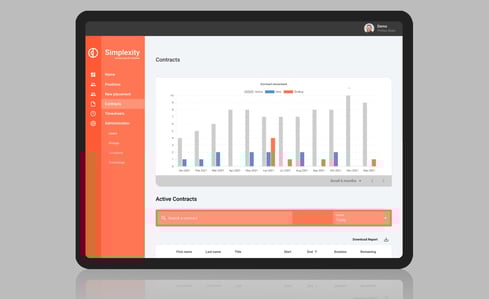
- Total Hidden Workforce Visibility: Oncore provides a unified view of all external contingent workers—who they are, what they are paid, and their compliance status—offering a single source of truth often missing in multi-supplier or multi-departmental arrangements.
- Standardised Processes: We ensure every contractor engagement follows a rigid, best-practice onboarding and off-boarding process, standardising the risk profile across the entire enterprise.
Oncore allows you to streamline your contingent workforce management with vendor-neutral technology-driven solutions, transforming a compliance liability into a strategic advantage.